Since the launch of the Center for Women & Wealth (CW&W) in 2015, we have met and been inspired by many powerful women who are pioneers in their respective fields. Through their work, they are challenging the status quo, reshaping industries, and changing the way we live our lives. Here, we showcase a group of inspiring and groundbreaking women who are pushing barriers and capitalizing on new opportunities in 2026.

Angela Bauer and Carolyn Bennett, Owners, Truly Good Foods
Sisters Bauer and Bennett are co-owners of Truly Good Foods, a second-generation women-owned manufacturer focused on distributing high-quality snacks across the U.S. Under their leadership, the business has flourished, embodying the power of innovation, resilience, and empowerment.
What is the most energizing aspect of your work today?
Bauer: We’re excited about preparing to celebrate the company’s 50th milestone anniversary and working on succession planning for the future. We are running the business and building the future.
What is the most valuable lesson you have learned from a mentor in your life?
Bauer: Two come to mind. First, although it is tempting to look outside the company – to what other companies are doing – most of your work and issues are inside your own company and in your control. Focus on what you can control. The biggest opportunities are inside your own walls.
And second, when faced with a decision – think about it. If it is a small decision, make it; a medium decision, think about it; and a big decision, discuss it.
Bennett: One of the most enduring lessons I learned from my father – my earliest mentor – was to “stay the course, but chart a new path.” As our family business celebrates 50 years, enters its third generation, and I mark my 42nd year within it, that philosophy guides me every day.
Staying the course means protecting the values that built our foundation – integrity, discipline, and lasting relationships – and remaining steady in our commitment to the people and communities we serve. Charting a new path means embracing thoughtful innovation, welcoming new ideas, and creating space for the next generation to contribute its own vision while honoring the legacy that shaped us.

Lauren Dunford, Co-Founder and CEO, Guidewheel
Dunford is the CEO and co-founder of Guidewheel, an artificial intelligence (AI)-powered factory operations software aimed at bringing factories to their sustainable peak performance. In 2022, Guidewheel was recognized along with a cohort of 100 promising companies by the World Economic Forum as a Technology Pioneer poised to make a significant impact on society. Dunford serves on the U.S. Center for Advanced Manufacturing’s Executive Committee, where she helps drive strategic initiatives in manufacturing.
What is the most energizing aspect of your work today?
The people – like the plant manager I talked to last week who told me his team has gone from low-70% to 86% runtime and then spent the next 10 minutes talking about the cultural shift on his floor. How his people show up differently now. How they see problems before they become problems. How they have pride in the numbers.
When the full team can see what’s happening on the factory floor in real time, the culture changes. Operators bring ideas. Managers lead differently. And those ideas flow back into the platform, making it smarter for the next plant, and the one after that.
Manufacturing can be an incredible engine for prosperity, opportunity, and sustainability. When it reaches its potential, communities reach theirs.
The other thing that never gets old is that this work is genuinely win-win. Better productivity means less waste, less energy, fewer emissions. Good for the business, good for the planet.
And watching our team grow into that mission is the third piece – seeing people find work that matters and grow to do things they never would have thought possible.
What is the biggest challenge facing your industry right now?
Margins are getting squeezed from every direction. Raw materials are up, labor is tight, and energy costs are volatile. Those who are keeping margins up are doing it through technology, but the real opportunity isn’t the shiny technology most people think of. It’s in the fundamentals. Through our work, we’ve seen that 75% of controllable downtime is operational: late starts, long changeovers, micro-stops that nobody’s tracking, machines sitting idle for reasons that never make it into a report.
Many of the things holding manufacturers back aren’t million-dollar engineering problems. They’re invisible ones, eating margin every single shift, because 99% of machines aren’t connected, and the solutions the industry keeps building only work for the 1% that are new enough to qualify.
That’s the challenge facing the industry right now. You can’t improve what you can’t measure. Until manufacturers close the gap in their data foundations, the margin pressure isn’t going anywhere.

Sara Falkson, Founder and CEO, Robyn Athletic
As founder and CEO of Robyn Athletic, Falkson works to empower body confidence in young female athletes through high-performance sports apparel and body confidence education. Inspired by her own experience as a Division I athlete, Falkson founded Robyn to support lifelong participation in athletics – ensuring every athlete feels confident in her body and unstoppable in her sport.
What is the most valuable lesson you have learned from a mentor in your life?
One of the most powerful lessons I learned came from my advisor, Karen Korellis Reuther, former creative executive at Nike and Reebok and now a professor at Harvard’s Graduate School of Design. She challenges the industry’s “shrink it and pink it” mindset: downsizing products designed for men and adding a feminine color for women.
Growing up in Boston with three older brothers, sports were my world. I quit dance, found field hockey, and spent years layering two sports bras just to feel supported. At 5 feet 3 inches with a larger chest, I quietly questioned whether my body was built for sport.
That question followed me to Harvard, where I pursued a master’s degree at the intersection of engineering and women’s sports. I was struck by a paradox: We can build self-driving cars and scale AI globally, yet we still have not engineered a sports bra that truly supports female athletes.
I began leading body confidence workshops across Boston schools, listening to more than 500 athletes and their sports bra pain points. I learned to sew in Harvard’s machine shop, “Frankensteined” prototypes with sports bras across the industry, and committed to designing for female athletes, by female athletes.
Karen taught me that the best time to start is now. Today, that work has grown into a national movement: body confidence workshops with schools and teams nationwide and the launch of Robyn Athletic’s confidence-first sports bras for Generation Z female athletes in spring 2027.
What is the most energizing aspect of your work today?
The most energizing part of my work is connecting with athletes, parents, coaches, and leaders across the women’s sports ecosystem to build a future where everybody feels confident in their body and unstoppable in their sport.
Today, one in two girls drop out of sports by age 14 due to low body confidence. Robyn exists to change that. I love sharing the moment when young athletes discover joy in movement, confidence in themselves, and belief in their own potential. When athletes feel supported – physically and emotionally – sports become more than a game. Sports shape how we show up in classrooms, boardrooms, and communities for life.
From high-performance sports bras to evidence-based body-confident sport workshops, Robyn equips athletes with the tools, education, and apparel they need to move, perform, and thrive on and off the field.

Kristen Frohnhoefer, President, Sea Tow Services International
Sea Tow is a nationwide membership-based marine assistance franchise organization serving boaters out of more than 500 U.S. ports. As president, Frohnhoefer oversees all internal operations, including marketing, membership, customer care, B2B relationships, sales, programs, and technology. After joining the family business full-time in 2003 and leading multiple departments, she assumed the role of president in 2015, continuing the company’s legacy while guiding its strategic evolution. Frohnhoefer also serves as president of the board of directors of the Sea Tow Foundation, a 501(c)(3) nonprofit dedicated to advancing boating safety and education.
What is the most valuable lesson you have learned from a mentor in your life?
My first mentor was my mother, Georgia Frohnhoefer, who was the operational backbone of the businesses my parents owned. She was relentless about learning, always asking questions, seeking out new learning opportunities, and implementing what she learned with discipline and confidence.
From her, I learned that you can accomplish far more than you think if you are willing to put in the work and commit to continuous growth. She instilled in me a strong work ethic, and most importantly, the understanding to always believe in your potential; the mindset continues to influence how I lead and pursue opportunities today.
What advice would you give your younger self?
Don’t underestimate yourself, and know that you don’t have to do everything alone.
Over time, I’ve learned that strong leadership is not about doing it all; it’s about building the right team. Surround yourself with people whose skills complement your own, who bring expertise you may not have, and who challenge you to think differently.
Confidence doesn’t compete with collaboration – it elevates it. Believing in your own abilities while empowering a strong team of talented people is what allows an organization to truly scale and succeed.

Michelle Hagerty, Founder, The Power of Sports
Philanthropist, community leader, and businesswoman Hagerty’s strong belief in the power of community was the catalyst behind The Power of Sports. The foundation focuses on utilizing sports to strengthen communities and create opportunities to foster personal growth. Hagerty works to expand access to sports and create environments where young athletes can thrive.
What values most impact how you spend your time, be it at home or at work?
My time is guided by service, family, and purpose. I believe strongly in the power of community and in creating opportunities for young people to thrive. At home, I prioritize being present and modeling generosity and resilience for my children. Professionally and philanthropically, I focus on initiatives that promote youth wellness, education, and access – especially through athletics, which I believe is one of the most powerful vehicles for character development.
As part of the bisesquicentennial, we will be honoring women who made their mark throughout history. What are you doing to make an impact in 2026 that will last for years to come?
In 2026, my focus is on creating sustainable pathways for youth access to sports and wellness opportunities through my work with community organizations and the Power of Sports initiative. I believe legacy is built through empowerment – equipping young people with confidence, discipline, and opportunity. I’m also committed to mentoring women and encouraging them to step into leadership roles, because when women support one another, communities flourish.

Mariana Hochschild, Co-Founder, Misión Huascarán
As co-founder of Misión Huascarán, Hochschild works every day to transform the lives of those living in rural areas of Peru. The nonprofit organization works on initiatives surrounding health, education, and nutrition to create opportunities for a better future for thousands.
What is the most valuable lesson you have learned from a mentor in your life?
One of the most valuable lessons I learned from my mentor, Violeta Correa, was that service begins with dignity and genuine care for others. She taught me that we cannot remain indifferent when we see people facing hardship. We must listen, understand their reality, and walk alongside them with empathy and respect. She showed me that real change is built through perseverance and a deep commitment to people’s well-being.
Her example continues to guide our work at Misión Huascarán, where we accompany communities with our three programs – health, education, and nutrition – so they can lead their own development. From her, I learned that leadership is ultimately an act of service, creating opportunities for others and helping transform realities together.
What are you doing to make an impact in 2026 that will last for years to come?
In 2026, we are focused on strengthening sustainable solutions to address childhood anemia and malnutrition in rural Peru.
We are consolidating community-based nutrition initiatives that ensure children and families in remote high-Andean communities have access to fortified foods. Through locally produced fortified bread and other interventions, we have already reduced anemia among our beneficiaries from over 44% to less than 10%, and we aim to reach more communities.
We are also expanding access to healthcare through mobile clinics and telemedicine. In 2025 alone, we provided more than 21,000 free medical consultations, bringing services to families who previously had no access to care.
We will continue to grow in 2026, developing our telemedicine program with help from international professionals. This will also help us provide specialized healthcare services, which otherwise would be unavailable in these rural communities.

Alisa Mall, Chief Investment Officer, DFO Management
With nearly 20 years of experience in investments, Mall brings her expertise in her current role as chief investment officer for DFO Management, where she is responsible for the investment management and oversight of DFO’s holdings. Beyond her day-to-day responsibilities, Mall works to advocate for more women in senior investment roles.
What is the most valuable lesson you have learned from a mentor in your life?
The most valuable lesson I learned from a mentor was: “Don’t say no to yourself.” Earlier in my career, I often took myself out of the running for opportunities because I didn’t think I had the exact right experience or qualifications required. A mentor challenged that mindset. He told me that the world will tell you “no” often enough – you don’t need to do it to yourself first. I’ve come back to that simple but powerful advice frequently: Don’t preemptively deny yourself opportunities out of insecurity or self-doubt. If you’re not the right person for something, let someone else make that decision. But don’t close doors before you’ve even knocked on them!
What is the most energizing aspect of your work today?
The most energizing part of my work is the people I get to spend time with on a regular basis. In my role, I get to meet with some of the smartest, most thoughtful investors in the world. Conversations can be far-reaching, covering everything from AI and innovation, to geopolitics, raising kids, energy, consumer trends, space travel, and entertainment – you name it. Being around big thinkers who challenge consensus and see around corners is incredibly energizing. Those conversations challenge my perspectives and constantly reignite my excitement about investing.

Patrice Meagher, Founder and CEO, MilkMate
After returning from maternity leave and struggling to comfortably breast pump while at work, Meagher was inspired to create MilkMate, a company that works to make workplace pumping efficient and comfortable. MilkMate advises firms on how to provide employees with a space to pump and provides the right equipment to do so – ultimately, empowering working moms everywhere and the employers that support them.
What values most impact how you spend your time, be it at home or at work?
Efficiency is the value that most shapes how I spend my time – because time is the one resource we never get more of. As a founder and a working mom of four, I’ve learned that minutes matter. But for me, efficiency isn’t about doing more. It’s about removing friction so the things that matter most actually fit.
I’m ruthless about prioritization at work and at home because wasted time usually means someone else is absorbing the cost – a child waiting for my attention, a colleague blocked on a decision, or a customer navigating something that should have been simple. Respecting people’s time is one of the most tangible ways we can respect their lives, ambitions, and families.
This belief is exactly why MilkMate exists. Pumping at work was unnecessarily inefficient, stressful, and time-consuming for women. The system wasn’t designed with their reality in mind. I didn’t want working mothers to have to choose between productivity and providing for their babies.
Efficiency, at its core, is about dignity. When we design systems that remove unnecessary friction, we give people back something priceless: time to focus on what matters most.
What is the most energizing aspect of your work today?
The most energizing part of my work is the ripple effect. Every time I hear directly from a mom who feels supported by her employer because of MilkMate, it reinforces why we’re building this company. When a woman tells us she was able to stay in her career, feel valued at work, and show up more fully at home – that’s fuel.
MilkMate isn’t just solving a logistical problem. We’re helping reshape how workplaces think about women, parents, and long-term retention. My background in corporate real estate taught me how physical spaces influence behavior. Applying that lens to create more human-centered workplaces feels like a full-circle moment.
What truly drives me is knowing the systems we build today will shape what work looks like for the next generation of women, including my own daughters. Cultural change doesn’t happen in sweeping declarations; it happens through practical solutions that make equity operational.
And I love when someone says, “I wish this had existed when I needed it,” and then still fights to bring it to her organization anyway. That’s when I know this work is bigger than a product. It’s progress.

Hafeezah Muhammad, Founder and CEO, Backpack Healthcare
Muhammad was inspired to create Backpack Healthcare following her own experiences with difficulties in mental health services for children. Backpack Healthcare is a technology-enabled pediatric mental health provider that offers a variety of services powered by cutting-edge AI solutions. The company is focused on delivering mental healthcare to underserved youth. Muhammed’s leadership is driven by empathy, collaboration, and personal growth.
What is the most energizing aspect of your work today?
What energizes me most about my work is building the foundation for a child’s future.
Every day, we help children and families overcome mental health challenges that could otherwise shape the trajectory of their lives. When a child gains the stability to succeed in school, the confidence to manage their emotions, and the support they need to thrive, we are not just solving a problem – we are changing a life.
I am equally inspired by the broader impact – expanding state by state to transform access to care at scale and mentoring the next generation of clinicians so they can build meaningful careers serving children.
Nothing is more powerful than seeing a child who once struggled begin to flourish. That transformation, both individual and systemic, is what truly energizes me.
What is the biggest challenge facing your industry right now?
The greatest challenge facing our industry today is both investment and education around Medicaid, particularly in children’s mental health.
More than half of U.S. children rely on Medicaid. It is the largest payer of behavioral health services in the country, yet it remains widely misunderstood and significantly underprioritized in private capital markets. Despite its scale and long-term impact, many leaders and investors do not fully appreciate how central Medicaid is to the health, stability, and future productivity of our nation.
At the same time, children are experiencing historic levels of anxiety, depression, and trauma. The need is undeniable. What is missing is broader understanding and sustained investment in modern infrastructure, workforce development, and scalable innovation within Medicaid systems.
When education and capital align, Medicaid has the potential to be one of the most powerful platforms for improving generational outcomes in the U.S. There is a growing recognition that tools such as donor-advised funds (DAFs), program-related investments (PRIs), and other catalytic approaches remain underutilized in this space, alongside a compelling opportunity to structure evergreen pools of capital that align with long-term stewardship while driving sustained, scalable impact.
The future of pediatric mental health depends on whether we choose to recognize that opportunity.
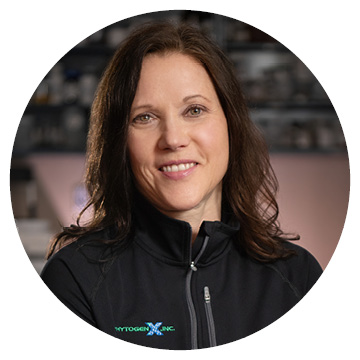
Julie Panzner, Owner and President, PhytogenX
Panzner is the owner and president of PhytogenX, a contract manufacturer specializing in research, development, and manufacturing of skincare, haircare, and body care products. As PhytogenX nears its 20th anniversary, Panzner continues to work with emerging founders to help bring their personal care vision to life.
What is the most energizing aspect of your work today?
As a contract manufacturer of personal care products, we partner with a wide range of brands that sell into retailers like Sephora, Ulta, and Target. I’m especially energized by meeting emerging founders and hearing the stories behind why they’re creating a brand to fill a specific niche in the market. As an entrepreneur myself, being part of another entrepreneur’s journey and helping bring their vision to life is incredibly exciting and meaningful.
At the same time, we also collaborate with well-established global brands, working with them to develop something truly unique and innovative. Products that don’t yet exist in the market are both challenging and deeply rewarding. The combination of supporting visionary startups and pushing the boundaries of innovation with major brands is what makes the work so energizing for me.
What is the biggest challenge facing your industry right now?
One of the biggest challenges facing the beauty industry today is the growing demand for “clean” and natural products. While this shift reflects positive consumer awareness, it also presents real formulation challenges. Many brands are pushing for minimal preservatives or relying on natural preservation systems that may not be as effective. As a result, creating products that meet consumer expectations while remaining safe, stable, and efficacious has become significantly more complex.
At the same time, social media has dramatically reshaped the industry landscape. Platforms like TikTok and Instagram can quickly elevate a brand to viral success or just as quickly damage its reputation. Trends move at an unprecedented pace, and consumer sentiment can shift overnight, directly affecting sales and brand perception.
Navigating these formulation complexities while staying agile in an increasingly social-driven market requires adaptability and strategic thinking. The ability to pivot quickly and balance innovation, safety, and market demand is essential for long-term success in today’s beauty industry.

Robyn Siers, Partner, Speed M&ATM by Jones & Spross
With over two decades of experience, Siers brings a unique skill set to her role. She currently serves as a Partner of Jones & Spross, a specialized law firm and consultancy, where she founded the Speed M&ATM approach, making mergers and acquisitions (M&A) cost-effective and efficient for all clients.
What is the most energizing aspect of your work today?
The intersection of strategy, technology, and human decision-making.
We are in a moment where AI and technology are reshaping how transactions are diligenced, negotiated, and integrated. What energizes me most is helping clients and deal teams not just react to change, but use it thoughtfully – understanding the risks, opportunities, and long-term implications.
At its core, M&A is about people making consequential decisions under pressure. I find enormous energy in helping bring clarity to that complexity – especially when a deal is at risk and a disciplined strategy can revive it. Those inflection points are where leadership matters most.
The U.S. is celebrating its 250th anniversary this year. What are you doing to honor this momentous occasion?
For me, this anniversary is an opportunity to reflect on the responsibility that comes with freedom and opportunity.
I’ve always believed that the strength of our country lies in access – to education, economic mobility, and systems that function fairly. My early work founding a nonprofit to connect siblings of children with special needs, and my continued involvement in educational advocacy, reflect that belief.
This year, I’m intentionally investing time in mentoring and pro bono efforts that expand opportunity – particularly in education. Honoring 250 years of history means helping ensure the next generation has the tools to participate fully in the next 250.
Interested in learning more? Reach out to our Center for Women & Wealth.
Brown Brothers Harriman & Co. (“BBH”) may be used to reference the company as a whole and/or its various subsidiaries generally. This material and any products or services may be issued or provided in multiple jurisdictions by duly authorized and regulated subsidiaries. This material is for general information and reference purposes only and does not constitute legal, tax or investment advice and is not intended as an offer to sell, or a solicitation to buy securities, services or investment products. Any reference to tax matters is not intended to be used, and may not be used, for purposes of avoiding penalties under the U.S. Internal Revenue Code, or other applicable tax regimes, or for promotion, marketing or recommendation to third parties. All information has been obtained from sources believed to be reliable, but accuracy is not guaranteed, and reliance should not be placed on the information presented. This material may not be reproduced, copied or transmitted, or any of the content disclosed to third parties, without the permission of BBH. All trademarks and service marks included are the property of BBH or their respective owners. © Brown Brothers Harriman & Co. 2026. All rights reserved. PB-09432-2026-03-23