Taxable Fixed Income Quarterly Update Q1 2026

March 31, 2026
Fixed Income Product Specialist, Tom Brennan and Institutional Client Analyst, Sophia Byers provide an analysis of the taxable fixed income investment environment.
Highlights
  • Three noteworthy events impacted markets during first quarter 2026: potential AI disruption, elevated redemptions and limits in BDCs, and the conflict in Iran and its effect on oil shipments and prices. Credit spreads widened only marginally, perhaps due to the magnitude of bond fund inflows that occurred.
  • The Bloomberg U.S. Aggregate Index had a slightly negative return during the quarter as interest rates and credit spreads rose slightly, while high-yield bonds and loans underperformed investment grade bonds.
  • Valuations improved and opportunities arose in select pockets of the market, credit issuance was resilient, and credit fundamentals indicate normalized credit performance of commercial, consumer, and real estate loans.
  • A core tenet of our investment process continues to be that credit valuations tend to be far more volatile than underlying fundamentals, and we are evaluating how to respond to emerging opportunities.

Taxable Fixed Income Q1 2026 Commentary

The Bloomberg U.S. Aggregate Index had a slightly negative return during first quarter 2026 as interest rates and credit spreads rose slightly. Interest rates rose across all tenors as oil prices surged with the onset of conflict in Iran, spurring inflationary concerns and weaker prospects for Federal Reserve (Fed) rate cuts in 2026. Index credit spreads widened marginally from historically low levels. High-yield bonds and loans had slightly negative returns of -0.5% and -0.4%, respectively, and underperformed investment grade bonds.

Several events drove headlines during the quarter. Three noteworthy events impacted markets: the potential for artificial intelligence (AI) to disrupt software companies, elevated redemptions and limits in business development companies (BDCs), and the onset of the conflict in Iran and its impact on oil shipments and prices. Each development brings concerns, particularly as AI disruption and BDC redemptions impact conditions in the direct lending industry and the rise in oil prices begins to impact consumer prices.

When it comes to the market impacts of these headlines, the bark seems worse than the bite. Broad measures of private credit fundamentals indicate that defaults are rising toward historically normal levels. The U.S. consumer appears resilient, with delinquency and charge-off rates on most types of consumer loans in-check. In the credit markets, software companies’ spreads widened in the loan market and BDC bonds’ spreads widened. However, at the broader sector levels, credit spreads widened only marginally to levels far lower than they have in past episodes of market anxiety. This may be explained partially by the magnitude of bond fund inflows that occurred as investors flocked to the safety of bonds given higher nominal interest rates.

With the general widening of credit spreads, valuations improved and opportunities arose in select pockets of the market; however, it is hardly a “fire sale” as spreads remain closer to their historical lows than their long-term averages. In the corporate credit markets, the percentage of the universes screening as potential “buy” opportunities increased to 10% from 4% for investment grade bonds, to 23% from 15% for high-yield corporate bonds, and to 55% from 48% for loans. Away from corporate credit, there remains no coupon cohort of the agency mortgage-backed securities (MBS) market that screened as a “buy” candidate according to our Valuation Framework. In the structured credit markets, spreads of nontraditional asset-backed securities (ABS) and collateralized loan obligation (CLO) debt widened towards historical averages, while spreads of single-asset single-borrower (SASB) commercial mortgage-backed securities (CMBS) were little changed during the quarter and near their historical averages.

Opportunities remain throughout the credit markets, though selectivity is imperative. Within the investment grade corporate bond market, over 40% of names of finance companies, life insurers, and specialty finance companies meet our criteria for purchase. There remains an abundance of opportunities in shorter-maturity bonds (under five years). In the high-yield market, there remains an abundance of “buy” opportunities in the media/telecommunications sector, as well as in three sectors impacted by higher oil prices: transportation, chemicals, and energy. Opportunities emerged in several structured credit sectors, including SASB CMBS, data center ABS, subprime auto ABS, personal consumer loan ABS, and broadly syndicated loan (BSL) CLOs.

Credit issuance was resilient amid cautious headlines and volatility, and issuers were met with generally favorable conditions as investors flocked to bond funds in the first quarter. Volumes of investment grade corporate bonds increased 12%, high-yield bonds increased 15%, nontraditional ABS increased 14%, nonagency CMBS increased 6%, and CLO increased 8% year over year. Leveraged loan volumes were flat vs. the strong pace of 2025.

Credit fundamentals indicate healthy and resilient performance of commercial, consumer, and real estate loans. Default rates of high-yield corporate bonds and loans sit near their longer-term averages. Measures of default activity in direct lending converge in a range of 3% to 5%, higher than recent lows but consistent with long-term averages. Consumer sentiment remains weak in the face of affordability concerns and recent increases in transportation costs, but delinquency and loss rates of many types of loans – including credit cards, autos, unsecured loans, and home improvement loans – have stabilized at normalized levels. Commercial real estate loan performance has steadied, with banks reporting minimal charge-offs and losses. Credit performance in SASB deal structures has normalized, with delinquency rates stabilizing and losses remaining low.

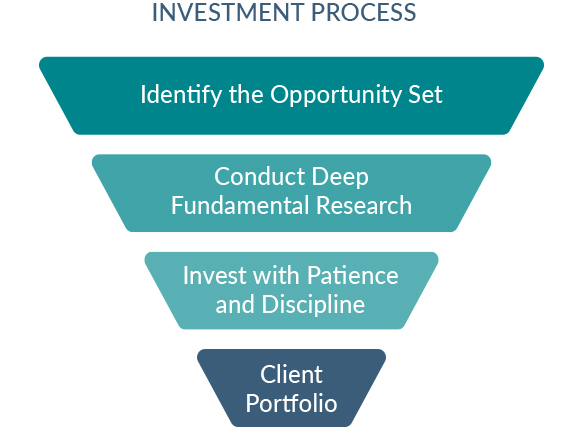
A core tenet underlying our investment process is that credit valuations tend to be far more volatile than underlying fundamentals. Determining what signal is being sent by evaluating index spreads is of less interest to a bottom-up credit manager like BBH. Instead, we are evaluating opportunities that are emerging and determining whether to shake with fear or embrace these concerns as a reason to invest in situations where valuations have become disconnected from otherwise strong fundamentals.

Past performance does not guarantee future results.

RISKS

Investing in the bond market is subject to certain risks including market, interest-rate, issuer, credit, maturity, call and inflation risk; investments may be worth more or less than the original cost when redeemed.

Asset-Backed Securities (“ABS”) are subject to risks due to defaults by the borrowers; failure of the issuer or servicer to perform; the variability in cash flows due to amortization or acceleration features; changes in interest rates which may influence the prepayments of the underlying securities; misrepresentation of asset quality, value or inadequate controls over disbursements and receipts; and the ABS being structured in ways that give certain investors less credit risk protection than others.

Basis point is a unit that is equal to 1/100th of 1% and is used to denote the change in price or yield of a financial instrument.

Traditional ABS include prime auto backed loans, credit cards and student loans (FFELP). Non-traditional ABS include ABS backed by other col-lateral types.

Issuers with credit ratings of AA or better are considered to be of high credit quality, with little risk of issuer failure. Issuers with credit ratings of BBB or better are considered to be of good credit quality, with adequate capacity to meet financial commitments. Issuers with credit ratings below BBB are considered speculative in nature and are vulnerable to the possibility of issuer failure or business interruption. High yield bonds, commonly known as junk bonds, are subject to a high level of credit and market risks.

INDEX DEFINITIONS

Ice BofA U.S. Corporate Index tracks the performance of USD denominated investment grade corporate debt publicly issued in the U.S. domestic market.

Bloomberg U.S. Corporate Bond Index represents the corporate bonds in the Bloomberg US Aggregate Bond Index, and are USD denominated, investment-grade (rated Baa3 or above by Moody’s), fixed-rate, corporate bonds with maturities of 1 year or more.

Bloomberg U.S. Aggregate Bond Index covers the USD-denominated, investment-grade (rated Baa3 or above by Moody’s), fixed-rate, and tax-able areas of the bond market. This is the broadest measure of the taxable U.S. bond market, including most Treasury, agency, corporate, mort-gage-backed, asset-backed, and international dollar-denominated issues, all with maturities of 1 year or more.

Uniform Mortgage Backed Security (UMBS) means a single-class MBS backed by fixed-rate mortgage loans on one-to-four unit (single-family) properties issued by either Enterprise which has the same characteristics (such as payment delay, pooling prefixes, and minimum pool submission amounts) regardless of which Enterprise is the issuer.

“Bloomberg®” and the Bloomberg indexes are service marks of Bloomberg Finance L.P. and its affiliates, including Bloomberg Index Services Limited (“BISL”), the administrator of the indexes (collectively, “Bloomberg”) and have been licensed for use for certain purposes by Brown Brothers Harriman & Co (BBH). Bloomberg is not affiliated with BBH, and Bloomberg does not approve, endorse, review, or recommend the BBH Strategy. Bloomberg does not guarantee the timeliness, accurateness, or completeness of any data or information relating to the fund.

The Indexes are not available for direct investment.

Opinions, forecasts, and discussions about investment strategies represent the author’s views as of the date of this commentary and are subject to change without notice. References to specific securities, asset classes, and financial markets are for illustrative purposes only and are not intended to be and should not be interpreted as recommendations. Brown Brothers Harriman & Co. (“BBH”) may be used to reference the company as a whole and/or its various subsidiaries generally. This material and any products or services may be issued or provided in multiple jurisdictions by duly authorized and regulated subsidiaries. This material is for general information and reference purposes only and does not constitute legal, tax or investment advice and is not intended as an offer to sell, or a solicitation to buy securities, services or investment products. Any reference to tax matters is not intended to be used, and may not be used, for purposes of avoiding penalties under the U.S. Internal Revenue Code, or other applicable tax regimes, or for promotion, marketing or recommendation to third parties. All information has been obtained from sources believed to be reliable, but accuracy is not guaranteed, and reliance should not be placed on the information presented. This material may not be reproduced, copied or transmitted, or any of the content disclosed to third parties, without the permission of BBH. All trademarks and service marks included are the property of BBH or their respective owners. © Brown Brothers Harriman & Co. 2026. All rights reserved.


NOT FDIC INSURED                         NO BANK GUARANTEE    MAY LOSE MONEY

IM-18355-2026-04-15    Exp. Date  07/31/2026

As of June 15, 2022 Internet Explorer 11 is not supported by BBH.com.