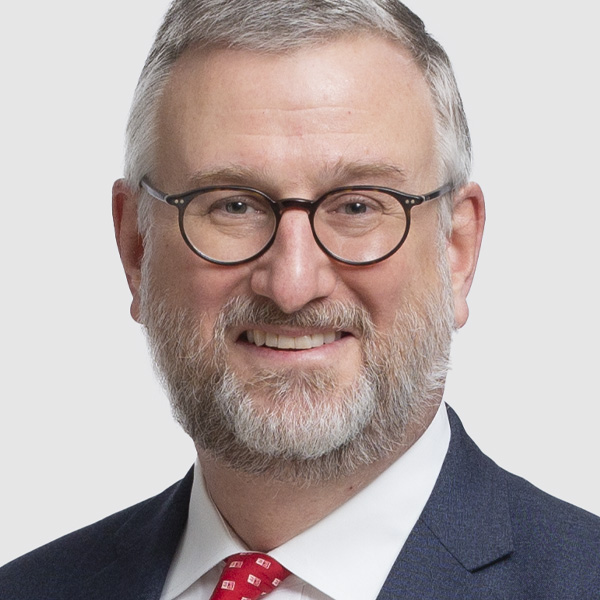
Author and historian Jon Meacham is a chronicler of U.S. leadership and a professor at Vanderbilt University. He has authored more than a dozen biographies, including “Franklin and Winston: A Portrait of Friendship,” “Thomas Jefferson: The Art of Power,” “Destiny and Power: The American Odyssey of George Herbert Walker Bush,” and the 2009 Pulitzer Prize-winning “American Lion: Andrew Jackson in the White House.”
Meacham recently joined us to discuss what 250 years of U.S. history has taught him about progress vs. perfection, the core attributes of effective leadership, and what these ideas mean for today’s politics, business environment, and society.
Thanks for joining us, Jon. We’re especially excited to talk to you during the U.S. bisesquicentennial. Is 250 years young for a democracy in a republic?
We are the oldest country structured in that way, but we are a remarkably young nation in the end.
I think this is the greatest country, and I have nothing but love for the enterprise, but to love something does not mean you don’t see its faults. The glory of the U.S. is not that we were conceived in perfection, but that we have become more perfect over time – and that’s a journey that can’t stop.
Let’s talk about that journey. What lessons from previous eras can we lean into that might guide us back to more reasoned discourse today, when it feels like every discussion can turn contentious?
It’s not about going back to some magical moment in the past where everything was great. It’s about building and improving so that the country works out for everyone – which was the original goal. You don’t want to simply try to recover some fictional Shangri-La.
We need to learn from the past to make the future better at every point. If you ask, “What did the U.S. do right? What was a moment of collective action where everything seemed to work?" I’d say World War II. It’s the defeat of fascism, the projection of force across two oceans to reject a rule of law, to create markets and a universe for democratic capitalism.
Most people think that the U.S. declared war on Nazi Germany right after Pearl Harbor happened. That’s not the case. We didn’t declare war on Nazi Germany until Nazi Germany declared war on us five days after Pearl Harbor. President Roosevelt (FDR) wasn’t sure he had the votes to declare war on Germany in December 1941. We rose to the occasion, but we waited.
That’s not being condescending about the past. It’s looking it in the eye and learning something important, which is that we don’t have to get everything right.
Another lesson is that the more we have leaned into the implications of the Declaration of Independence, the better we have been. I have something I call the portrait test: When someone looks at a picture of you, what are they going to think?
You want to act and lead in a way where someone contemplates your image and is suffused with the sense that that was someone who built and who cared, not someone who tore down and who took for themselves.
What leadership attributes have historically given presidents the ability to adapt without changing the fundamental moral values that got them elected in the first place or led them into public service?
Three attributes come to mind: curiosity, candor, and empathy.
First, great presidents, leaders, citizens, and people are curious. They want to know what’s going on. I came to that conclusion after spending four years virtually living with Thomas Jefferson. Curiosity was his defining characteristic. When he doubled the size of the country with the Louisiana Purchase, he did so not simply because he was a skilled politician, though he was, but because he’d been in a kind of figurative conversation with the previous three or four centuries of Western life.
What was going on that culminated in Philadelphia in the late 18th century?
- There was Johannes Gutenberg, who invented printing with movable type, which democratized information
- The Protestant Reformation, where we saw power shift from being embedded in popes, princes, prelates, and kings, who either by accident of birth or incident of election were given authority over everyone
- The translation of sacred scripture into the vernacular
- The Scientific Revolution
- The rise of the bourgeoisie
- The development of market capitalism
All this combined to lead to an entire reorientation of the world from something that was seen as vertical, where the people on top were there forever, to a more horizontal understanding, where the means of prosperity and political liberty were available to all because of an innate understanding.
That is still the most important shift in Western life since the passion of Jesus, which determines how we tell time that’s still unfolding. The iPhone in your pocket is part of that shift. The ongoing features and resilience of capitalism are part of that shift. Jefferson captured all of that and was able to do it because he had been thinking about what the political manifestation of that shift would be.
Second, great presidents are candid. The presidents who get in trouble are the ones who think they’re a little bit smarter than we are. The U.S. population deserves to have it straight from the shoulder.
I think of FDR and Winston Churchill. In 1942, FDR said the news was going to get worse before it got better. He was basing that on a speech that Churchill had given earlier that year in which he said, “The British people can face any misfortune with fortitude and buoyancy, as long as they are convinced that those who are in charge of their affairs are not deceiving them or not themselves dwelling in a fool’s paradise.” It’s a two-pronged test. People want to be sure, but they also want to be sure those in charge aren’t lying to themselves. If people can check those two boxes, the covenant in modern democracies has been that they will do what it takes when called upon.
Third, great leaders are empathetic. Empathy is the oxygen of democracy. If we can’t put ourselves in each other’s shoes, democracy doesn’t work. It requires give and take. This is an elemental human drama that unfolds every day. President George H.W. Bush, the most empathetic man I have ever known, used to say, “If you can’t put yourself in the other guy’s shoes, why would they vote for you?”