BBH Structured Fixed Income Quarterly Update – Q4 2025

  • Capital Partners
Portfolio Managers, Neil Hohmann, Chris Ling, and Andrew Hofer provide an analysis of the investment environment and most recent quarter-end results of the Structured Fixed Income strategy.

4Q Highlights

  • The portfolio outperformed its benchmark during the quarter with selection driving performance.
  • Credit valuations remained broadly unattractive as credit spreads narrowed throughout the year; however, there are pockets of opportunity and credit issuance was generally strong.
  • We are confident that credits owned in client portfolios meet our tests of durability while offering appropriate compensation for the risks assumed, and we believe our clients’ portfolios are positioned to navigate opportunities that arise when valuations become more appealing.
Performance
As of December 31, 2025


Total Return

Average Annual Total Returns

Composite/Benchmark

3 Mo.

YTD

1 Yr.

3 Yr.

5 Yr.

Since Inception

BBH Structured Fixed Income Composite (Gross of Fees)

1.37%

6.99%

6.99%

8.94%

5.21%

5.00%

BBH Structured Fixed Income Composite (Net of Fees)

1.28%

6.62%

6.62%

8.56%

4.84%

4.64%

BBH Structured Fixed Income Benchmark

1.25%

5.80%

5.80%

5.51%

2.24%

2.56%

Past performance does not guarantee future results

Composite Inception Date: 01/01/2016

Upon the close of business on 12/31/2025, BBH Credit Partners, LLC, a subsidiary of BBH, became the investment adviser to the strategy. Performance prior to the close of business is of accounts managed by BBH.

Returns of less than one year are not annualized.

BBH Structured Fixed Income Benchmark is a combination of two indices. The Bloomberg US ABS Index was used prior to 11/1/2023; the Bloomberg U.S. ABS ex. Stranded Cost Utility Index is used subsequently. Due to recent changes in the composition of the Bloomberg US ABS Index, the new Bloomberg U.S. ABS ex.

Stranded Cost Utility Index more closely reflects the effective duration of the strategy. One cannot invest directly in an index. The composition of the indexes is materially different than the strategy’s holdings.

Sources: Bloomberg and BBH & Co.

Market Environment

The Bloomberg U.S. Aggregate Index advanced 1.1% in fourth quarter 2025. The return was driven by lower short-term interest rates following Federal Reserve (the Fed) rate cuts, stable intermediate-term rates, and positive excess returns to credit across most sectors. These factors offset negative pressures from higher long-term rates and negative excess returns from long-maturity corporate bonds. Indexes of high-yield corporate bonds and loans each returned 1.3%, outperforming investment grade bonds after controlling for the effects of duration.

The Fed cut the federal funds target range twice by a total amount of 0.50% to 3.50% to 3.75%. The yield curve steepened during the quarter, with short-term rates moving lower while long-term rates increased. The Fed’s next announcement date is January 28, 2026, and market estimates are for the Fed to cut rates by a total of 0.50% over the course of 2026. Significant attention will be on the Fed in 2026 as Chairman Jerome Powell’s term comes to an end in May, and there are questions about the degree to which political influences may impact monetary policy under a new Chairperson.

U.S. fiscal policies, trade policies, and geopolitical tensions made headlines during the year. The One Big Beautiful Bill Act (OBBBA) enacted tax cuts and spending reductions that impacted many policies, including the phase-outs of several clean energy tax breaks tied to electric vehicles and solar energy, changes to several federal student loan programs, and the elimination of some Affordable Care Act (ACA) subsidies. Congressional opposition to the expiration of these ACA subsidies resulted in a record-breaking shutdown of the U.S. government that ended with the passage of a bipartisan funding bill to reopen the government that did not resolve the extension of ACA subsidies. Tariff announcements produced significant market volatility during second quarter 2025. However, the market quickly absorbed the tariff changes even as any potential inflationary impact remains unknown. Escalations of geopolitical tensions in Ukraine, Gaza, Iran, and Venezuela commanded headlines throughout the year. Despite this barrage of newsworthy headlines, the Bloomberg U.S. Aggregate Index posted a full-year 2025 total return of 7.3% as interest rates declined and credit excess returns were positive across sectors.


Exhibit I: Fixed income index returns for various indexes as of December 31, 2025, displaying duration, total return, and excess return.

Valuations

Credit valuations remained broadly unattractive as credit spreads narrowed throughout the year. According to our valuation framework, there were few “buy” opportunities in mainstream indexes at quarter end1. Only 4% of investment grade corporate bonds, 15% of high-yield corporate bonds, and 0% of agency mortgage-backed securities (MBS) met our valuation purchase criteria. Collateralized loan obligation (CLO) debt spreads remained near their recent lows.

Notwithstanding, there are pockets of opportunity. In the investment grade corporate bond market, over 20% of shorter-maturity single-A bonds meet our criteria for purchase, over 30% of bonds issued by life insurers and finance companies screen favorably, and we have identified a few small idiosyncratic opportunities as well. Nearly half of corporate loans screen as “buy” candidates according to our valuation framework. In the structured credit markets, opportunities are emerging as valuations are improving in several subsectors. As nontraditional ABS spreads widened, spreads in certain subsectors have become appealing. Single-asset single-borrower (SASB) commercial mortgage-backed securities (CMBS) subsector spreads remained near their longer-term averages.

Credit issuance was generally strong, and markets have been open to issuers seeking to raise capital or refinance existing debt. Investment grade corporate bond volumes increased 4% year over year, ABS issuance was up 9%, and nonagency CMBS volumes surged 40% in 2025. High-yield bond volumes increased 9%, but loan volumes decreased 26% year over year.

One theme that permeated issuance across credit sectors was the increase in data center financing deals to fund the enormous demand for artificial intelligence (AI) infrastructure. The scale of issuance was notable: We estimate $300 billion of investment grade corporate bond volumes were tied to such projects in 2025, representing 16% of high-grade corporate issuance. We estimate that data center and fiber ABS issuances represented 8% of ABS volumes in 2025 (up from 4% in 2024) while data center SASB CMBS deals were 8% of nonagency CMBS volumes (up from 2% in 2024). These financings included both established and first-time issuers, various deal structures, and different levels of protection from equity or asset pledges. We believe our time-tested approach to identifying durable credit investments in such deals should help our client portfolios navigate potential volatility tied to AI headlines or risk events.

The U.S. economy proved resilient amid an eventful political landscape. Consumer spending remains strong, although there are concerns over a K-shaped economy forming from the divergence between the spending of higher- and-lower-income consumers. Consumer sentiment indexes sit at weak levels, with concerns about high prices and a softening labor market weighing on consumers. Credit performance of consumer-related debt and loans suggest a “normalization” of credit losses – above the stimulus – induced lows of the recent past and well below those experienced in recessions. The resumption of payments on federal student loans has not yet had a meaningful impact on delinquencies in payments on other types of consumer debt, such as credit cards or auto loans.

U.S. business performance remains strong. The quarter began with fears that private credit losses could accelerate and reduce the returns in this recently popular segment of credit markets. For example, there were two significant defaults that arose from instances of fraud: Tricolor and First Brands. While the impact of those defaults was relatively contained, larger-scale concerns emerged regarding potentially relaxed lending standards. Equity of business development companies (BDCs) traded at a 10% discount to their net asset value, rivaling lows last experienced in 2023. In the fixed income markets, credit spreads on BDC debt widened marginally, while spreads on CLO debt were relatively stable.

We have not observed evidence of a broad increase in default activity. The data reveals that default rates and loss statistics have normalized. The default rate of leveraged credits (high-yield bonds and syndicated loans) stood near its longer-term average at 3.1%. The default rate of loans held in private credit CLOs remains near the default rate of the broader leveraged credit market and near its longer-term average. BDC credit performance weakened slightly, but remained resilient, with nonaccrual rates ticking up only slightly while rates of realized losses and write-downs remained subdued. Charge-offs and delinquency rates of business loans held at U.S. commercial banks increased only slightly and remain well below levels experienced during recessions. We believe that any increase in private credit defaults, or losses, will drive dispersion in credit performance across issuers.


Exhibit II: Market outlook by sector as of December 31, 2025.

Performance

The portfolio outperformed its benchmark during the quarter with selection driving performance. Positive selection effects were driven by holdings of CMBS, ABS, and business development companies (BDCs). Sector effects had a small but positive impact on relative performance. Positions in collateralized fund obligations, agency CMBS, cell tower ABS, SASB CMBS, and triple-net lease ABS contributed the most to performance. Holdings of data center ABS and collateralized loan obligations detracted from performance.


Exhibit III: Attribution as of December 31, 2025, showing average portfolio weight and gross contribution displayed in basis points.

Transaction Summary

We continued to find durable credits2 offering attractive value even as valuations reflect a growing belief that the U.S. economy is slowing. The table below summarizes a few notable portfolio additions.


Exhibit IV: Notable transactions as of December 31, 2025.

Characteristics

At the end of the quarter, the portfolio’s duration was 1.9 years and continued to approximate that of its benchmark. The portfolio’s yield and average spread (option-adjusted spread, or OAS) remained elevated vs. its benchmark of traditional ABS. OAS decreased over the quarter from 260 to 245, indicating less risk and better value. The portfolio’s weighting to high-yield and nonrated instruments stood at 16% at quarter end. The portfolio’s weight to reserves increased to 4% from 2% while the weight to BDCs declined to 19% from 22%.


Exhibit V: Characteristics as of December 31, 2025, including credit rating and sector allocation.

Concluding Remarks

Volatility is a feature of markets, and a built-in assumption and driver in our valuation process. We do not know what will cause the next bout of market volatility. Credit markets sit at a point of low to very low credit spreads in many major sectors. Periods of broadly unattractive credit valuations necessitate strong purchase and sale disciplines, a method of evaluating attractiveness of individual bonds, and careful selection accentuated by robust credit research. We are confident that credits owned in client portfolios meet our tests of durability while offering appropriate compensation for the risks assumed. Further, we believe our clients’ portfolios are positioned to navigate opportunities that arise when valuations become more appealing.

1Our valuation framework is a purely quantitative screen for bonds that may offer excess return potential, primarily from mean reversion in spreads. When the potential excess return is above a specific hurdle rate, we label them “Buys” (others are “Holds” or “Sells”). These ratings are category names, not recommendations, as the valuation framework includes no credit research, a vital second step.

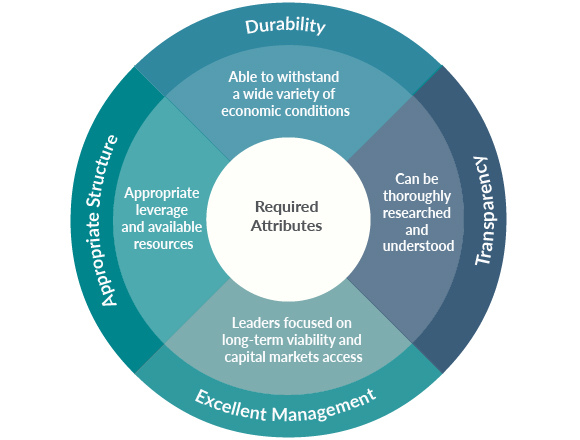
2Obligations such as bonds, notes, loans, leases, and other forms of indebtedness, except for cash and cash equivalents, issued by obligors other than the U.S. Government and its agencies, totaled at the level of the ultimate obligor or guarantor of the Obligation. Durable means the ability to withstand a wide variety of economic conditions.

Definitions

Bloomberg US ABS Index is the asset backed securities component of the Bloomberg US Aggregate Bond Index. The index includes pass-through, bullet, and controlled amortization structures. The ABS Index includes only the senior class of each ABS issue and the ERISA-eligible B and C tranche. The Bloomberg U.S. ABS ex. Stranded Cost Utility Index excludes certain stranded cost utility bonds included in the Bloomberg US ABS Index.

An index is not available for direct investment.

“Bloomberg®” and the Bloomberg indexes are service marks of Bloomberg Finance L.P. and its affiliates, including Bloomberg Index Services Limited (“BISL”), the administrator of the indexes (collectively, “Bloomberg”) and have been licensed for use for certain purposes by Brown Brothers Harriman & Co (BBH). Bloomberg is not affiliated with BBH, and Bloomberg does not approve, endorse, review, or recommend the Strategy. Bloomberg does not guarantee the timeliness, accurateness, or completeness of any data or information relating to the Strategy.

Risks

Investing in the bond market is subject to certain risks including market, interest-rate, issuer, credit, and inflation risk; investments may be worth more or less than the original cost when redeemed. Mortgage-backed and asset-backed securities have prepayment and extension risks.

SASB lacks the diversification of a transaction backed by multiple loans since performance is concentrated in one commercial property. SASBs may be less liquid in the secondary market than loans backed by multiple commercial properties.

Asset-Backed Securities (“ABS”) are subject to risks due to defaults by the borrowers; failure of the issuer or servicer to perform; the variability in cash flows due to amortization or acceleration features; changes in interest rates which may influence the prepayments of the underlying securities; misrepresentation of asset quality, value or inadequate controls over disbursements and receipts; and the ABS being structured in ways that give certain investors less credit risk protection than others.

Below investment grade bonds, commonly known as junk bonds, are subject to a high level of credit and market risks.

Foreign investing involves special risks including currency risk, increased volatility, political risks, and differences in auditing and other financial standards.

The Structured Fixed Income Strategy Representative Account is managed with the same investment objectives and employs substantially the same investment philosophy and processes as the strategy.

The securities discussed do not represent all of the securities purchased, sold or recommended for advisory clients and you should not assume that investments in the securities were or will be profitable.

Opinions, forecasts, and discussions about investment strategies represent the author’s views as of the date of this commentary and are subject to change without notice.

Issuers with credit ratings of AA or better are considered to be of high credit quality, with little risk of issuer failure. Issuers with credit ratings of BBB or better are considered to be of good credit quality, with adequate capacity to meet financial commitments. Issuers with credit ratings below BBB are considered to be of good credit quality, with adequate capacity to meet financial commitments. Issuers with credit ratings below BBB are considered speculative in nature and are vulnerable to the possibility of issuer failure or business interruption. The Not Rated category applies to Non-Government related securities that could be rated but have no rating from Standard and Poor’s or Moody’s. Not Rated securities may have ratings from other nationally recognized statistical recognized statistical rating organizations.

Brown Brothers Harriman Investment Management (“IM”), a division of Brown Brothers Harriman & Co (“BBH”), claims compliance with the Global Investment Performance Standards (GIPS®). GIPS® is a registered trademark of CFA Institute. CFA Institute does not endorse or promote this organization, nor does it warrant the accuracy or quality of the content contained herein.

To receive additional information regarding IM, including a GIPS Composite Report for the strategy, contact John Ackler at 212 493-8247 or via email at john.ackler@bbh.com.

Gross of fee performance results for this composite do not reflect the deduction of investment advisory fees. Actual returns will be reduced by such fees. “Net” of fees performance results reflect the deduction of the maximum investment advisory fees. Returns include all dividends and interest, other income, realized and unrealized gain, are net of all brokerage commissions, execution costs, and without provision for federal or state income taxes. Results will vary among client accounts. Performance calculated in U.S. dollars.

The objective of our Structured Fixed Income Strategy is to deliver excellent returns in excess of industry benchmarks through market cycles. The Composite is comprised of all fully discretionary, fee-paying structured fixed income accounts over $10 million. Investments are focused on asset-backed securities, commercial mortgage-backed securities, collateralized loan obligations, and corporate debt securities that are primarily investment grade. Non-investment grade securities may be held. Investments are focused on U.S. dollar denominated securities, but non-U.S. dollar securities may be held. The accounts are managed to a duration +/- 2 years of the Bloomberg ABS ex-Stranded Cost Utility Index. Effective December 1, 2022, the composite definition was slightly altered to establish a band around the duration of the Bloomberg ABS ex-Stranded Cost Utility Index.

Duration is a measure of the portfolio’s return sensitivity to changes in interest rates.

Standard deviation measures the historical volatility of a returns. The higher the standard deviation, the greater the volatility. The Sharpe ratio is the average return earned in excess of the risk-free rate (the Fed Funds rate).

Traditional ABS include prime auto backed loans, credit cards and student loans (FFELP). Non-traditional ABS include ABS backed by other collateral types.

Brown Brothers Harriman & Co. (“BBH”) may be used to reference the company as a whole and/or its various subsidiaries generally. This material and any products or services may be issued or provided in multiple jurisdictions by duly authorized and regulated subsidiaries. This material is for general information and reference purposes only and does not constitute legal, tax or investment advice and is not intended as an offer to sell, or a solicitation to buy securities, services or investment products. Any reference to tax matters is not intended to be used, and may not be used, for purposes of avoiding penalties under the U.S. Internal Revenue Code, or other applicable tax regimes, or for promotion, marketing or recommendation to third parties. All information has been obtained from sources believed to be reliable, but accuracy is not guaranteed, and reliance should not be placed on the information presented. This material may not be reproduced, copied or transmitted, or any of the content disclosed to third parties, without the permission of BBH. All trademarks and service marks included are the property of BBH or their respective owners. © Brown Brothers Harriman & Co. 2025. All rights reserved.

Not FDIC Insured                             No Bank Guarantee                        May Lose Money

IM-17953-2026-01-30        Exp. 04/30/2026

As of June 15, 2022 Internet Explorer 11 is not supported by BBH.com.