Chart depicting 50-day rolling average change in 10-year AAA yields (left hand side) and 10-year AAA yields for 2025 (right hand side). In early April 2025, municipal yields soared but then fell to end the year trading with a 5-bp range.
Highlights
|
How’s it going to be?
It is officially 2026, and all the usual questions are flying about the new year. How will yields move? What will happen to credit spreads? How will new issuance look? In short, how’s it going to be? Reflecting on all the twists and turns in 2025, forecasts would have proved futile, as they often do. This is why we rely on process over predictions and let our research guide us.
Early in the year, municipals struggled due to fears of the potential impairment of their tax treatment. Then, over a three-day period in early April following President Trump’s announcement of his Liberation Day tariffs, municipal yields soared by 90 basis points (bps)1 in a liquidity vacuum reminiscent of the onset of the COVID-19 pandemic five years ago. The market recovered in early fall 2025, with yields falling 50 bps from September to mid-October, but in the ten weeks that followed, yields traded within just a 5-bp range – the lowest volatility we have ever seen!
On the credit front, total returns for AAA- through BBB-rated securities ended the year virtually the same.
Chart depicting the municipal bond index returns by rating. Total returns for AAA- through BBB-rated securities ended 2025 virtually the same.
Credit spreads barely budged despite growing fundamental uncertainties wrought by tariff policy, the One Big Beautiful Bill Act (OBBBA), and the public discourse over the next Federal Reserve (Fed) chair. Even a two-day, 50% collapse of a municipal high-yield fund during the summer, and the precipitous fall of certain Brightline railroad bonds into the $30 range a few months after that, had little impact. Still a fledgling operation, Brightline’s ridership has fallen woefully short of their forecasts. We do not speculate on projects and instead rely on proven revenues and robust support mechanisms to help avoid situations like this.
On the supply front, new issuance surged to a new record in 2025. At $575 billion, supply surpassed 2024’s then-record by 15%, with school funding accounting for the vast majority of the year-over-year increase. Investors easily absorbed the year’s new issuance. Two notable exceptions were the failed placements of a large tire recycling plant in Oklahoma and a casino in New York. We view the ultimate purpose of a bond issuance as an important component of credit criteria. As we prefer to invest in bonds that fund essential services or critical infrastructure, those deals failed our basic test.
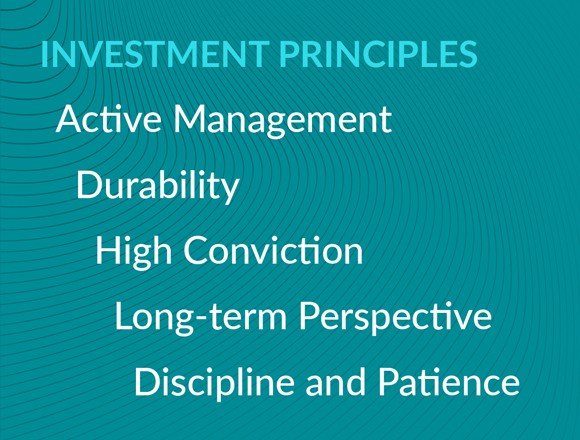
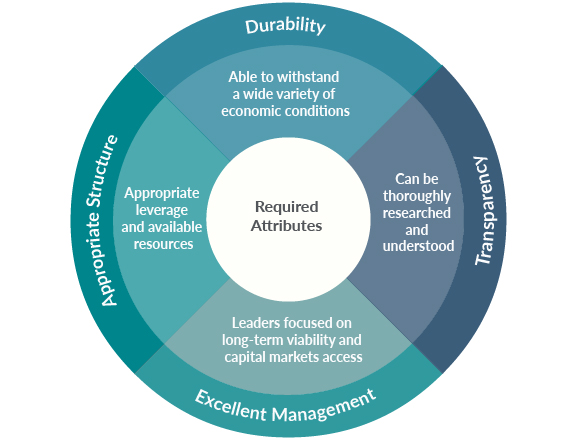
We seek to own securities that possess durability – meaning resilience to a wide range of economic and political conditions, both nationally and locally. Historically, we have viewed federal aid as a stabilizing force for municipal credit, but over the last year, it has become a source of uncertainty. The federal government has signaled an intent to shift funding burdens onto state and local governments. One of the primary catalysts of this funding shift is the OBBBA, which was passed in July and brought sweeping tax and policy changes.
The OBBBA includes Medicaid cuts of $900 billion, with significant changes to enrollment eligibility beginning in 2027. States receive roughly one-third of their funding from federal aid. Medicaid comprises nearly 70% of that aid, and the rest is split across education, infrastructure, and social assistance, among other areas. We expect most state credits to remain strong, but hospitals will face larger challenges. The year-end expiration of Affordable Care Act enhanced tax credits could leave millions uninsured. This, along with lower reimbursement rates and supplemental funding, poses more immediate risks. In addition, we anticipate changes in the transportation, higher education, and housing sectors. We note that many of these funding cuts are not currently priced into market valuations, and we did not expect such drastic cuts.
On a local level, in November 2025, Zohran Mamdani was elected as the new mayor of New York City. The city’s $120 billion budget is larger than those of all states except California, Texas, and New York itself. Many have asked whether Mayor Mamdani can accomplish his wide-ranging agenda. We think he will face constraints. The mayor does not control the city’s tax rates nor its debt limit. The mayor also cannot change bus fares (which are within the purview of the Metropolitan Transportation Authority [MTA], a public benefit corporation of the state) or the minimum wage (which is set under state law). On the other hand, the mayor can propose a budget to be approved by the city council; veto city laws; hire and fire agency heads and commissioners, such as members of the Rent Guidelines Board; and appoint city judges. However, exercising these powers can take time, and change will not occur overnight.
The extended federal government shutdown in Q4 2025 and the interruption of critical economic statistical releases added to an already eventful 2025. This no doubt hindered the effectiveness of the Fed’s crystal ball. Data dependency requires data, after all. Despite persistent inflation above its 2% target, the Fed shifted its attention to labor market conditions. Characterizing the labor market as “weakening” or “normalizing” from very strong levels is a matter of political preference. Nevertheless, the Fed has now eased interest rates for three Federal Open Market Committee (FOMC) meetings in a row, but it is anyone’s guess where the federal funds rate will end this year. There is an unusually wide range of views within the Fed itself, ranging from six rate cuts to two rate hikes for this year. One thing is for certain; the Fed will get a new chair in May 2026, one who the White House believes will try to move aggressively on rates. This is an important factor underpinning our recommendation to extend out of cash and reserves to lock in today’s attractive intermediate- and longer-maturity yields.
Although longer bonds continued their comeback during fourth quarter 2025, they still lagged significantly for the year. We gradually leaned into this weakness, adding larger positions of longer bonds (15- to 20-year maturities), given their substantial excess yield and roll-down potential. Short-maturity bonds reflect expectations of aggressive Fed easing, limiting their potential returns. We are proud of the results we generated through a year in which the market behaved aberrantly, from extreme volatility to extreme stability. For the fourth quarter, we generated a return of about 1.5% for our intermediate portfolios, bringing their calendar year return to 5.7%. We closed the quarter 52 bps ahead of the index, bringing our full-year excess returns to +58 bps.
Despite unprecedented market stability during the quarter, we added several attractive opportunities. Within the prepaid gas/energy sector, we purchased a five-year obligation guaranteed by JP Morgan (JPM) at a spread of 100 bps. This was the first JPM-backed issuance since 2012. We also participated in a transaction backed by American National Insurance Company (ANICO), with an eight-year maturity, at a spread of 175 bps. Although this was ANICO’s first entry into the municipal market, the credit is well known to our taxable fixed income team. Within the housing sector, we added a range of planned amortization class (PAC) bonds as well as Freddie Mac-backed bonds with spreads in the range of 110 to 125 bps. We also purchased longer-maturity New York City Transitional Finance Authority bonds with spreads in the 50-bp range. This is roughly 15 to 20 bps more than we believe is warranted for this strong credit. Furthermore, these bonds offer attractive roll-down, which enhances their expected returns. We expect Q4’s additions, together with securities we added earlier in 2025, to provide benefits for years to come.
Looking ahead, how’s it going to be? Only time will tell, but we would not believe anyone who claims to know. Our investment process and research will help us seize opportunities and guard against the inevitable risks we will face. We are excited about the year ahead and look forward to hitting the ground running in 2026!
We hope you enjoyed a healthy and happy holiday season and appreciate the trust you have placed in us.
Performance |
|||||||
|---|---|---|---|---|---|---|---|
|
Total Returns |
Average Annual Total Returns |
|||||
Composite/Benchmark |
3 Mo. |
YTD |
1 Yr. |
3 Yr. |
5 Yr. |
10 Yr. |
Since Inception |
BBH Municipal Fixed Income Composite (gross of fees) |
1.57% |
5.98% |
5.98% |
4.94% |
1.94% |
2.93% |
3.73% |
BBH Municipal Fixed Income Composite (net of fees) |
1.50% |
5.72% |
5.72% |
4.68% |
1.69% |
2.68% |
3.47% |
Bloomberg Municipal Index 1-10 Yr Blend (1-12) |
0.98% |
5.14% |
5.14% |
3.54% |
1.21% |
2.08% |
3.23% |
Returns of less than one year are not annualized. Inception date: 05/01/2002. Past performance does not guarantee future results. Sources: BBH & Co and Bloomberg |
|||||||
Representative Account |
|||||||
|---|---|---|---|---|---|---|---|
South Carolina Mortgage Revenue Bonds |
2.6% |
||||||
Southeast Energy Authority Energy Supply Revenue Bonds Series 2025E |
2.6% |
||||||
Port of Seattle - GARBS and PFCS |
2.4% |
||||||
State of New Jersey |
2.3% |
||||||
Texas School Bond Guarantee Program |
2.2% |
||||||
Texas Department of Housing and Community Affairs Single Family Mortgage Revenue Bonds |
2.2% |
||||||
Nebraska Investment Finance Authority |
2.1% |
||||||
Salt Verde Financial Corporation |
2.0% |
||||||
Oregon School Bond Guarantee Program |
2.0% |
||||||
Metropolitan Washington Airports Authority |
2.0% |
||||||
Total |
22.5% |
||||||
Sources: Bloomberg and BBH Total may not sum due to rounding. |
|||||||
1 One basis point is equal to 1/100th of 1%, or 0.01%.
Risks
There is no assurance that a portfolio will achieve its investment objective or that the strategy will work under all market conditions. The value of the portfolio can be affected by changes in interest rates, general market conditions and other political, social and economic developments. Each investor should evaluate their ability to invest for the long-term, especially during periods of downturn in the market.
Investing in the bond market is subject to certain risks including market, interest-rate, issuer, credit, maturity, call and inflation risk; investments may be worth more or less than the original cost when redeemed.
Income from municipal bonds may be subject to state and local taxes and at times the alternative minimum tax.
The Strategy also invests in derivative instruments, investments whose values depend on the performance of the underlying security, assets, interest rate, index or currency and entail potentially higher volatility and risk of loss compared to traditional stock or bond investments.
As the Strategy’s exposure in any one municipal revenue sector backed by revenues from similar types of projects increases, the Strategy will become more sensitive to adverse economic, business or political developments relevant to these projects.
The Representative Account is managed with the same investment objectives and employs substantially the same investment philosophy and processes as the strategy.
The objective of our Municipal Fixed Income Strategy is to deliver excellent after-tax returns in excess of industry benchmarks through market cycles. The Composite includes all fully discretionary fee-paying municipal fixed income accounts with an initial investment equal to or greater than $5 million that are managed to an average duration of approximately 4.5 years. Portfolios that subsequently fall below $4.5 million are excluded from the Composite.
Bloomberg 1-10 Year Municipal Bond Index is a component of the Bloomberg Municipal Bond index, including bonds with maturity dates between one and 17 years. The Bloomberg Municipal Bond Index is considered representative of the broad market for investment grade, tax-exempt bonds with a maturity of at least one year. One cannot invest directly in an index.
Bloomberg US Aggregate Bond Index is a market value-weighted index that tracks the daily price, coupon, pay-downs, and total return performance of fixed-rate, publicly placed, dollar-denominated, and non-convertible investment grade debt issues with at least $300 million par amount outstanding and with at least one year to final maturity.
Bloomberg US Corporate Bond Index measures the investment grade, fixed-rate, taxable corporate bond market. It includes USD-denominated securities publicly issued by US and non-US industrial, utility and financial issuers. The Index is a component of the US Credit and US Aggregate Indices.
“Bloomberg®” and the Bloomberg 1-10 Year Municipal Bond Index are service marks of Bloomberg Finance L.P. and its affiliates, including Bloomberg Index Services Limited (“BISL”), the administrator of the index (collectively, “Bloomberg”) and have been licensed for use for certain purposes by Brown Brothers Harriman & Co (BBH). Bloomberg is not affiliated with BBH, and Bloomberg does not approve, endorse, review, or recommend the BBH Strategy. Bloomberg does not guarantee the timeliness, accurateness, or completeness of any data or information relating to the fund.
Brown Brothers Harriman Investment Management (“IM”), a division of Brown Brothers Harriman & Co (“BBH”), claims compliance with the Global Investment Performance Standards (GIPS®). GIPS® is a registered trademark of CFA Institute. CFA Institute does not endorse or promote this organization, nor does it warrant the accuracy or quality of the content contained herein.
To receive additional information regarding IM, including a GIPS Composite Report for the strategy, contact John Ackler at 212 493-8247 or via email at john.ackler@bbh.com.
Gross of fee performance results for this composite do not reflect the deduction of investment advisory fees. Actual returns will be reduced by such fees. “Net” of fees performance results reflect the deduction of the maximum investment advisory fees. Returns include all dividends and interest, other income, realized and unrealized gain, are net of all brokerage commissions, execution costs, and without provision for federal or state income taxes. Results will vary among client accounts. Performance calculated in U.S. dollars.
Holdings are subject to change.
Credits: Obligations such as bonds, notes, loans, leases and other forms of indebtedness, except for Cash and Cash Equivalents, issued by obligors other than the U.S. Government and its agencies, totaled at the level of the ultimate obligor or guarantor of the Obligation.
Issuers with credit ratings of AA or better are considered to be of high credit quality, with little risk of issuer failure. Issuers with credit ratings of BBB or better are considered to be of good credit quality, with adequate capacity to meet financial commitments. Issuers with credit ratings below BBB are considered speculative in nature and are vulnerable to the possibility of issuer failure or business interruption.
Opinions, forecasts, and discussions about investment strategies represent the author’s views as of the date of this commentary and are subject to change without notice. References to specific securities, are for illustrative purposes only and are not intended to be, and should not be interpreted as recommendations.
Brown Brothers Harriman & Co. (“BBH”) may be used to reference the company as a whole and/or its various subsidiaries generally. This material and any products or services may be issued or provided in multiple jurisdictions by duly authorized and regulated subsidiaries. This material is for general information and reference purposes only and does not constitute legal, tax or investment advice and is not intended as an offer to sell, or a solicitation to buy securities, services or investment products. Any reference to tax matters is not intended to be used, and may not be used, for purposes of avoiding penalties under the U.S. Internal Revenue Code, or other applicable tax regimes, or for promotion, marketing or recommendation to third parties. All information has been obtained from sources believed to be reliable, but accuracy is not guaranteed, and reliance should not be placed on the information presented. This material may not be reproduced, copied or transmitted, or any of the content disclosed to third parties, without the permission of BBH. All trademarks and service marks included are the property of BBH or their respective owners. © Brown Brothers Harriman & Co. 2026. All rights reserved. IM-17759-2026-01-06
NOT FDIC INSURED NO BANK GUARANTEE MAY LOSE MONEY