- The two-day FOMC meeting ends this afternoon; U.S. Treasury’s quarterly refunding announcement will also command market attention; ADP reports is private sector jobs estimate; October ISM manufacturing PMI and September JOLTS data will also be reported; Brazil is expected to cut rates 50 bp to 12.25%
- Nationwide October U.K. house price index came in firm; this comes ahead of the Bank of England decision tomorrow, when another dovish hold is expected
- Japan officials are already jawboning; BOJ held an unscheduled bond buying operation to slow the rise in yields; New Zealand reported soft Q3 jobs data; RBNZ published its Financial Stability Report; Caixin reported soft October manufacturing PMI; Korea reported solid October trade data
The dollar remains firm ahead of the FOMC decision. DXY is trading higher for the second straight day near 106.685. Clean break of 106.589 sets up a test of the October 3 high near 107.348. The euro is trading lower near $1.0550 and clean break of $1.0540 sets up a test of the October 3 low near$1.0450. Sterling is trading lower near $1.2140 and is on track to test the October 4 low near $1.2035. USD/JPY is trading lower near 151.20 as official jawboning saw the pair fall from the 151.70 cycle high. The pair remains on track to test the October 2022 high near 152. Looking through any potential Fed-related noise today, we believe the dollar’s uptrend remains intact. Simply put, the U.S. economy continues to grow above trend even as the rest of the world slips into recession. Recent data confirm that the U.S. economy is still running hot and needs further tightening. Eventually, the Fed (and the market) will acknowledge this.
AMERICAS
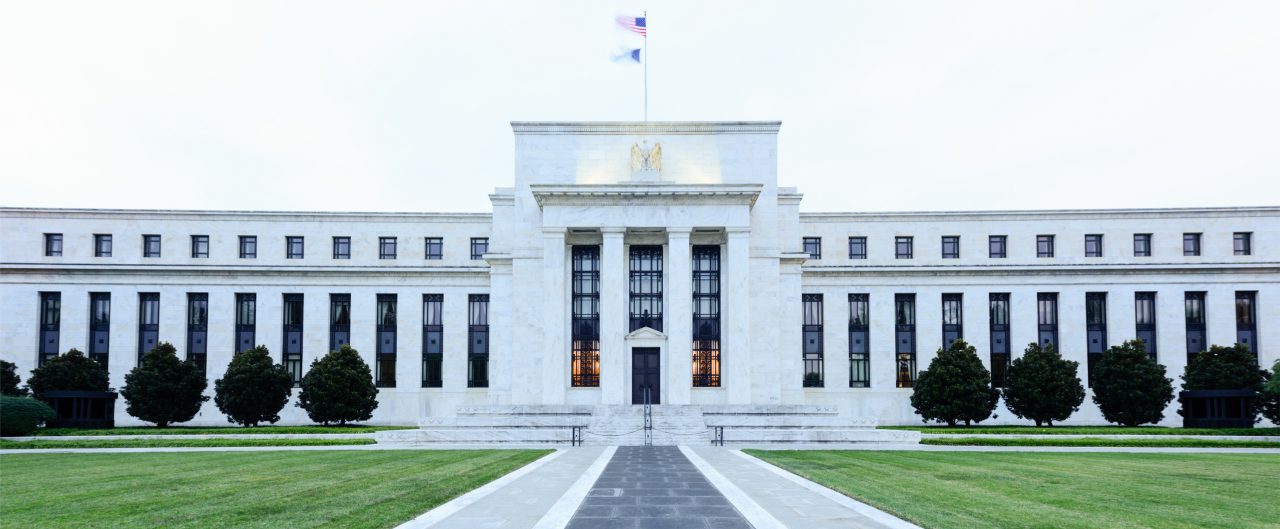
The two-day FOMC meeting ends this afternoon. No change in policy is expected but the bank needs to send a hawkish message. After it held rates at the September meeting, the Fed noted that “Recent indicators suggest that economic activity has been expanding at a solid pace. Job gains have slowed in recent months but remain strong, and the unemployment rate has remained low. Inflation remains elevated.” Since then, the U.S. economic data have outperformed and the Fed has to acknowledge this. The Fed also said then that “In determining the extent of additional policy firming that may be appropriate to return inflation to 2 percent over time, the Committee will take into account the cumulative tightening of monetary policy, the lags with which monetary policy affects economic activity and inflation, and economic and financial developments.” Here, we expect no change. Updated macro forecasts and Dot Plots won’t come until the December meeting.
The dollar tends to weaken on FOMC decision days. DXY has fallen 7 of the past 8 FOMC decision days and 11 of the past 13. Think about that; even during one of the most aggressive Fed tightening cycles, the dollar still ended weaker on most FOMC decision days, even the ones where it hiked 50 and 75 bp. We suspect part of the blame can be placed on Chair Powell, who often softened the Fed’s hawkish statements with dovish press conferences. Given his dovish turn right before the media blackout for this meeting, there are significant risks that Powell does this again today. If Powell doubles down on the dovish narrative, it would be very risky given how strong the data have been coming in. WIRP suggests virtually no odds of a hike today, rising to 30% December 13 and topping out near 45% January 31.
The U.S. Treasury’s quarterly refunding announcement will also command market attention. After Treasury lowered its borrowing estimate for Q4 Monday to $776 bln vs. $852 bln seen in late July, it seems likely that the current long dated UST auction sizes of $103 bln will be little changed for now. The prospect of greater supply has been hanging over the market since the August quarterly refunding and so steady issuance in Q4 may help limit further upward pressure on U.S. yields. The 10-year yield has been unable to break above 5.0% so far, while the 30-year yield has been capped near 5.20%.
ADP reports is private sector jobs estimate. It is expected at 150k vs. 89k in September. NFP has outperformed ADP the past two months. Bloomberg consensus sees 180k for NFP vs. 336k in September, while its whisper number stands at 208k. Of note, initial claims for the BLS survey week came in at 198k, the lowest since mid-January, while the 4-week moving average of 206k was the lowest for a BLS survey week since January, when NFP came in at 517k vs. 189k expected. As such, we see upside risks to NFP. The unemployment rate is seen steady at 3.8% and average hourly earnings are seen falling two ticks to 4.0% y/y.
Key PMI readings for October will continue rolling out. ISM manufacturing PMI will be reported and the headline is expected to remain steady at 49.0. Keep an eye on employment and prices paid, which stood at 51.2 and 43.8 in September, respectively. ISM services PMI will be reported Friday and the headline is expected at 53.0 vs. 53.6 in September. Keep an eye on employment and prices paid, which stood at 53.4 and 58.9 in September, respectively. Yesterday, Chicago PMI came in at 44.0 vs. 45.0 expected and 44.1 in September.
September JOLTS data will also be reported. Job openings are expected at 9.40 mln vs. 9.61 mln in August. If so, it would support our view that the labor market remains tight and that wage pressures will remain in place. September construction spending (0.4% m/m expected) and October vehicle sales (15.6 mln annual rate expected) will also be reported today.
Q3 employment cost index was reported yesterday. It came in a tick higher than expected at 1.1% q/q vs. 1.0% in Q2, while the y/y rate came in at 4.4% vs. 4.5% in Q2. The ECI data served as a good reminder that the U.S. economy remains robust and the labor market remains tight. Wage pressures are unlikely to fall much until the labor market softens and we're just not there yet.
The U.S. economy remains robust in Q4. The Atlanta Fed GDPNow model will be updated today after the data. The first GDPNow estimate for Q4 came in last Friday at 2.3% SAAR vs. 4.9% actual in Q3. Elsewhere, the weekly Friday update to the New York Fed’s Nowcast model saw Q4 growth at 2.79% SAAR vs. 2.27% previously. If we get another reading above 2% SAAR for Q4, it would be the sixth straight quarter of above trend growth at a time when the Fed is trying to generate below trend growth. It’s very difficult to say that the Fed has done enough tightening.
Brazil COPOM is expected to cut rates 50 bp to 12.25%. At the last meeting September 20, the bank cut rates 50 bp for the second straight meeting and signaled that there is a high bar for changing that pace of easing. Another 50 bp cut is priced in for the December 15 meeting as well. Brazil also reports September IP and October trade data today. IP is expected at 0.6% y/y vs. 0.5% in August.
Finance Minister Fernando Haddad announced that President Lula will appoint two new members to the central bank board. Paulo Picchetti would replace Fernanda Guardado as the bank’s director of international affairs, while Rodrigo Teixeira would replace Mauricio Moura as director of institutional relations. Outgoing Guardado and Moura are considered to be the leading hawks on the board. If Picchetti and Teixeira are approved by the Senate, Lula will have appointed four of the board’s nine seats. Of note, central bank chief Campos Neto’s term ends December 31 2024.
EUROPE/MIDDLE EAST/AFRICA
Nationwide October U.K. house price index came in firm. It rose 0.9% m/m vs. -0.4% expected and a revised 0.1% (was 0.0%) in September, and was the second straight monthly gain. The y/y rate improved to -3.3% vs. -4.8% expected and -5.3% in September, and suggests U.K. house prices may finally be stabilizing. Nationwide’s Chief Economist Gardner noted that “The uptick in house prices in October most likely reflects the fact that the supply of properties on the market is constrained. There is little sign of forced selling, which would exert downward pressure on prices, as labor market conditions are solid and mortgage arrears are at historically low levels.” Elsewhere, final October manufacturing PMI came in at 44.8 vs. 45.2 preliminary. Final October services and composite PMIs will be reported Friday.
This comes ahead of the Bank of England decision tomorrow, when another dovish hold is expected. At the last meeting September 21, it kept rates steady at 5.25% by a 5-4 vote, and we think the number of dissents in favor of a hike will fall tomorrow as the bank’s conviction to hike further wanes. The bank said then that further tightening may be required if inflation persists, adding that policy must be restrictive enough for a “sufficiently long” period of time. However, the market does not believe the bank. WIRP suggests less than 5% odds of a hike tomorrow, rising modestly to top out near 33% February 1. Updated macro forecasts will be released at this meeting, with growth expectations likely to be marked down.
ASIA
Japan officials are already jawboning. Ministry of Finance currency chief Kanda said “We’re on standby. But I can’t say what we’ll do, and when; we’ll make judgments overall, and we’re making judgments in a state of urgency.” He added that “We’re very concerned about one-sided, sudden moves in currencies. Fundamentals don’t move several yen in one night.” We believe the BOJ is likely to intervene somewhere between 152 and 155 but until it hikes rates, the yen is likely to continue weakening. Of note, data show the Bank of Japan did not intervene in October. That means the huge move down in USD/JPY on October 3 was due to other factors, as we suspected.
Bank of Japan also held an unscheduled bond buying operation today to slow the rise in yields. It offered to buy JPY300 bln of 5- to-10-year JGBs and JPY100 bln of 3- to-5-year JGBs. The benchmark 10-year yield was trading at a new cycle high near 0.97% before the buying operation. We expect the market to continue testing the BOJ’s resolve. We believe that YCC is for all intents and purposes dead. There is no longer any hard target range for 10-year JGB yield and so the market will continue to test the BOJ and it will intervene to prevent sharp moves up in the 10-year yield. But make no mistake, that yield is moving higher. We still stick with our call for BOJ liftoff in early 2024. We had originally thought either March 19 or April 26 but we now see some risks of a move January 23.
New Zealand reported Q3 jobs data. Unemployment came in as expected at 3.9% vs. 3.6% in Q2 and was the highest since Q2 2021. RBNZ Deputy Governor Hawkesby later said that bank stress tests show that New Zealand’s financial system can cope with the impact of unemployment as high as 9%. There was a -0.2% q/q drop in employment as well as a drop in the participation rate to 72.0% vs. 72.4% in Q2 . Private sector wages rose 0.9% q/q vs. 1.0% expected and 1.1% in Q2. RBNZ tightening expectations remain subdued, as WIRP suggests 5% odds of a hike November 29, rising modestly to top out near 25% February 28.
RBNZ published its Financial Stability Report. The bank noted that its rate hikes are gradually raising debt servicing costs for households and businesses. It estimated that about two thirds of mortgage loans fixed at low rates during the start of the pandemic have now been rolled over into higher rate loans and that “Higher interest rates are placing an increased strain on indebted households’ budgets.” The RBNZ said that loan arrears have been steadily rising over the past year but stressed that these remain well below levels seen during the financial crisis. Lastly, the RBNZ said it would consider early next year how debt-to-income (DTI) restrictions might help maintain financial stability but added that no decisions have been made yet.
Caixin reported soft October manufacturing PMI. It came in at 49.5 vs. 50.8 expected and 50.6 in September. Its services and composite PMIs will be reported Friday, with services expected at 51.0 vs. 50.2 in September. Since the official non-manufacturing PMI came in at 50.6 vs. 52.0 expected and 51.7 in September, we see downside risks to the Caixin reading. Indeed, the PMI readings so far confirm our skepticism that the modest stimulus measures taken so far will have much lasting impact.
Korea reported solid October trade data. Exports came in at 5.1% y/y vs. 6.1% expected and -4.4% in September, while imports came in at -9.7% y/y vs. -2.1% expected and -16.5% in September. This was the first y/y gain in exports since September 2022, while imports contracted the least since March. Low base effects from last year should help flatter the y/y comparisons for both series, but we do not expect a robust recovery in regional trade and activity as global growth is likely to slow further in 2024.