- Market attention has turned to the Fed’s balance sheet; Fed officials remain cautious; New York Fed December inflation expectations fell; December NFIB small business optimism rose; Mexico reports December CPI
- Germany reported weak November IP data; U.K. retail sales were weak in December; Poland is expected to keep rates steady at 5.75%
- Japan reported soft December Tokyo CPI and weak November household spending; BOJ indicated it will reduce its monthly purchases of 10- to 25-year JGBs; Australia reported solid November retail sales data; Taiwan reported solid December trade data
The dollar is trading higher even as the debate about QT heats up. After the Fed indicated QT discussions have begun, markets are split on the timing see below). DXY is trading higher near 102.449 and break above 102.87 is needed to set up a test of the December high near 104.263. The euro is trading slightly lower near $1.0930 while sterling is trading lower near $1.2710. USD/JPY is trading lower today near 144.10 as Japan returned from holiday. All indications are that the U.S. economy remains robust in Q4 and likely to remain so in 2024, which certainly wouldn’t require 5-6 rate cuts from the Fed this year. Over the past few weeks, the readings have mostly come in on the firm side and so we continue to believe that the current market easing expectations still need to adjust significantly. These expectations have started to shift but more needs to be seen. Perhaps this week’s U.S. inflation data will provide some impetus.
AMERICAS
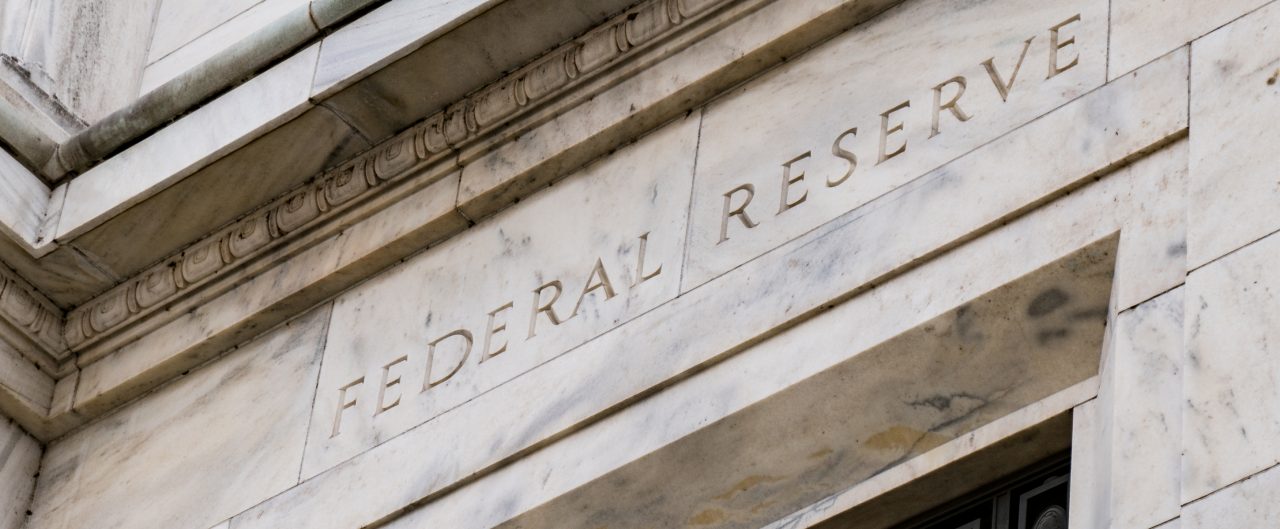
With markets increasingly sure that the Fed will cut rates sooner rather than later, attention has turned to the Fed’s balance sheet. December FOMC minutes showed that the Fed has start thinking about thinking about slowing the pace of QT. This past weekend, Logan said “In my view, we should slow the pace of runoff as ON RRP balances approach a low level.” She added that “Normalizing the balance sheet more slowly can actually help get to a more efficient balance sheet in the long run by smoothing redistribution and reducing the likelihood that we’d have to stop prematurely.” She is clearly in favor of adjusting QT sooner rather than later.
The fact that several FOMC members wanted to discuss QT at the December FOMC means it's on their radar. However, we don't yet have a sense yet whether Logan and the others are an outlier or part of consensus and so we await further clues. The view from Wall Street is split. According to Bloomberg, BOA and Barclays see QT tapering in April and then halted mid-summer, while Deutsche Bank sees tapering in June and Morgan Stanley sees tapering September. We note that in the summer of 2019, the Fed cut rates three times (July, September, and October) in its so-called “mid-cycle adjustment” even as QT was ongoing. It wasn’t until funding markets went haywire that the Fed started buying USTs again in September 2019.
Fed officials remain cautious. Bowman toned down her hawkish rhetoric by highlighting “that the rate of inflation could decline further with the policy rate held at the current level for some time." Meanwhile, Bostic repeated his expectation for two rate cuts this year starting in Q3. WIRP suggests 5% odds of a cut January 31 and rising to 60% March 20 vs. 75% at the start of this week and nearly priced in at the start of last week. Five rate cuts are priced in vs. six at the start of last week, though there are still nearly 50% odds of a sixth cut. We see scope for the markets to further trim odds of rate cuts as the U.S. consumer spending outlook remains encouraging. Today, Vice Chair for Supervision Michael Barr speaks on bank regulation.
New York Fed December inflation expectations fell. 1-year inflation expectations fell to 3.0% in December vs. 3.4% in November to the lowest since December 2020 and down from the 6.78% peak in June 2022. 3-year expectations also fell to 2.6% vs. 3.0% in November to the lowest since June 2020 and down from the 4.21% peak in October 2021. Both remain above the Fed's 2% target but are getting closer every month.
We see underlying strength in the economy, and this is likely to persist. The Atlanta Fed’s GDPNow model has Q4 growth at 2.5% SAAR vs. 2.0% previously and will be updated today after November trade (-$64.9 bln expected) is reported. Elsewhere, the New York Fed’s Nowcast model has Q4 growth at 2.5% SAAR and Q1 growth at 2.7% SAAR and will be updated Friday. Bottom line: the U.S. economy is still growing above trend in Q4 and quite possibly Q1. Of note, the early Q4 reads were based largely on strike-depressed October data. As November and December data continue to bounce back as we’ve seen already, the Q4 growth estimates should rise accordingly. In turn, this momentum is likely to carry over into Q1.
December NFIB small business optimism rose. Headline came in at 91.9 vs. 91.0 expected and 90.6 in November. This was the highest since July.
Mexico reports December CPI. Headline is expected at 4.57% y/y vs. 4.32% in November, while core is expected at 5.15% y/y vs. 5.30% in November. If so, this would be the second straight monthly acceleration in headline and would move it further above the 2-4% target range. No wonder that at the last policy meeting December 14, the central bank kept rates steady at 11.25% and maintained its forward guidance that it will keep rates steady “for some time.” This suggests steady rates at the next meeting February 8. The swaps market is pricing in 25 bp of easing over the next three months followed by another 50 bp of easing over the subsequent three months.
EUROPE/MIDDLE EAST/AFRICA
Germany reported weak November IP data. IP fell -0.7% m/m vs. 0.3% expected and a revised -0.3% (was -0.4%) in October. As a result, the y/y rate fell to -4.8% vs. -4.0% expected and a revised -3.4% (was -3.5%) in October. This was the worst y/y reading since February 2022. France reports IP tomorrow and is expected at 0.1% m/m vs. -0.3% in October. Italy and Spain report IP Thursday. Italy is expected at -0.2% m/m vs. -0.2% in October. Eurozone-wide IP will be reported January 15, but the German reading suggests the manufacturing sector continues to struggle.
European Central Bank easing expectations remain elevated. We believe the eurozone disinflationary backdrop and weak economic growth outlook reinforce the case for the ECB to start cutting rates in Q2 and this is a clear headwind for euro. WIRP suggests 5% odds of a cut January 25, rising to nearly 50% March 7 and fully priced in April 11. Six cuts are nearly priced in for 2024. Centeno sounded dovish as he said “I don’t think we have to wait until May to make decisions. I don’t see any sign that second-round effects on wages have materialized or will materialize or that wages will put additional pressure on prices.” On the other hand, Vujcic said “We’re not talking about cutting interest rates now, and probably won’t before summer.” Villeroy speaks later today.
U.K. retail sales were weak in December. The British Retail Consortium reported that total retail sales (not adjusted for prices) rose 1.7% y/y in December, below the 3-month average growth of 2.3%. Sales rose nearly 7% y/y a year ago and so high base effects played a role. Still, senior BRC official noted that “The festive period failed to make amends for a challenging year of sluggish retail sales growth. Weak consumer confidence continued to hold back spending.” Official retail sales data will be reported January 19 and likely to show a decline after November’s 1.3% m/m gain. However, Friday’s November GDP data will offer more insights on overall economic activity. The UK economy is expected to recover slightly in November 2023 (consensus: +0.2% m/m) after contracting -0.2% m/m the previous month. GBP is consolidating around $1.2740 and U.K. interest rate futures still imply the policy rate will be cut 125 bp this year to 4.0%.
National Bank of Poland is expected to keep rates steady at 5.75%. Minutes of the December 6 meeting will be released Thursday. At that meeting, the central bank kept rates steady at 5.75% for the second straight time. Since then, inflation has continued to fall to the lowest since September 2021. The swaps market is pricing in 25 bp of easing over the next three months followed by another 50 bp over the subsequent three months.
ASIA
Japan reported December Tokyo CPI. Headline came in a tick lower than expected at 2.4% y/y vs. a 2.7% in November, core (ex-fresh food) came in as expected at 2.1% y/y vs. 2.3% in November, and core ex-energy came in as expected at 3.5% y/y vs. 3.6% in November. Core inflation was the lowest since June 2022 and bodes well for the national reading.
Japan also reported weak November household spending. Spending came in at -2.9% y/y vs. -2.3% expected and -2.5% in October. This was the weakest reading since July and suggests that falling real wages continue to weigh on consumption. November cash earnings will be reported tomorrow. Nominal earnings are expected to remain steady at 1.5% y/y while real earnings are expected at -2.0% y/y vs. -2.3% in October. No wonder household spending remains weak. The BOJ has made rising wages an important factor for removing policy accommodation and we have yet to see significant upward wage pressures.
The Bank of Japan indicated it will reduce its monthly purchases of 10- to 25-year government bonds. The BOJ bought JPY150 bln of super-long JGBs today, the same as it did previously at its December 25 operation. However, the frequency of purchases has been reduced to 5 per month vs. 7 previously and so the total monthly amounts will fall. That said, this adjustment is more a reflection of easing JGB yield pressures rather than a sign that the BoJ is about to remove accommodation. Indeed, BOJ liftoff expectations remain low. WIRP suggests only 5% odds of liftoff January 23, rising to 20% March 19, 55% April 26, 65% June 14, and fully priced in July 31.
Australia reported solid November retail sales data. Sales came in at 2.0% m/m vs. 1.2% expected and a revised -0.4% (was -0.2%) in October. As a result, the y/y rate picked up to 2.2% vs. 1.2% in October and was the strongest since June. It appears that consumers postponed spending in October to take advantage of Black Friday promotions in November. This should ease RBA concerns that the current weakness in household consumption growth persists for longer than expected. AUD/USD rose briefly above 0.6730 following the solid retail sales data but drifted lower under 0.6700 the rest of the trading session on broad USD strength. Cash rate futures continue to imply 50 bp of rate cuts this year. November building approvals were also reported and came in at 1.6% m/m vs. -2.0% expected and a revised 7.2% (was 7.5%) in October.
Taiwan reported solid December trade data. Exports rose 11.8% y/y vs. 5.6% expected and 3.8% in November, while imports fell -6.5% y/y vs. -7.0% expected and -14.8% in November. Export growth was the strongest since July 2022 but due in large part to low base effects. Of note, exports to Hong Kong and China fell -6.4% y/y, while exports to the U.S. rose 49.7% y/y and exports to Japan rose 10.1% y/y. December export orders will be reported January 22.